


Back when my communication office was part of the advancement function, we launched our first employee fundraising campaign. So, I would ask my fellow employees if they would consider giving to the foundation. One response has forever stuck with me: “No, isn’t blood, sweat, and tears enough?”

This was a guy with seniority, a front-facing administrator in admissions. He made a pretty good salary. He recruited students. But he didn’t value the college’s mission enough to pony up $5 a month to support work that couldn’t be covered by public funding.
I really hate to sound harsh, but I believe that those of us who work in community colleges are doing the most important work in higher education. We give first, second, third chances. Community colleges were student-centered before the change in demographics and the enrollment cliff made traditional colleges and universities become more student-centered. We are already under-funded and under-appreciated.
How, then, can we not commit not only our time, not only our talent, but our treasure as well?
This is Annual Fund season, and most of our colleges are likely doing an end-of-year campaign. Development professionals say that employee giving provides more than money.
“It means a lot to our board and outside donors if employees give,” said Judi Urquhart, chief advancement officer at Bristol Community College in Massachusetts.
The foundation funds such things as compensation for students on unpaid internships, giving students a chance to take a résumé-building job that they can’t afford to do for free. The Bristol Foundation also supports CARE funds, which cover emergencies that can derail a student from completing their goals, such as the cuts in SNAP benefits in Fall 2025.
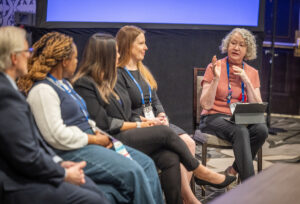
“Employees who give to [the foundation] are supporting the college’s mission,” said Sara Anton, chief executive officer of the Cape Cod Community College Educational Foundation in Massachusetts. “We engage them in ways not only to support our students, but faculty and staff as well.”
Their foundation offers supplemental funds for professional development, as well as funds for student needs that can’t be met with public funds.
The president I served for 16 years had a mantra: Put your money where your mission is. He managed college budget funding with that mantra in mind, focusing on student success initiatives and faculty development. (And, I’m glad to say, he saw funding for effective marketing and communications as a critical part of that mission.)
For me, this mantra became personal. Putting my money where my mission is helps me sort through the cacophony of requests from so many different organizations. I find that following that principle invests me in what I believe in. And although retired, I still give to my former employer, because Bristol continues to do important work in a part of the state that needs it. And I give to my local community college as well, designating my gifts to efforts that matter and help our students persist.
We mission-driven community college warriors see what a difference we make with our students and in our communities. Take that passion for what you do every day and become a donor to your community college. You can support an enterprise that already gets your blood, sweat and tears—consider giving it a part of your treasure as well.
Sally Chapman Cameron was the vice president for college communications (ret.) at Bristol Community College in Massachusetts. She is an NCMPR president emeritus and the 2021 Petrizzo Award winner. This is the first of an occasional blog series she is writing over the next quarter.

STAY CONNECTED